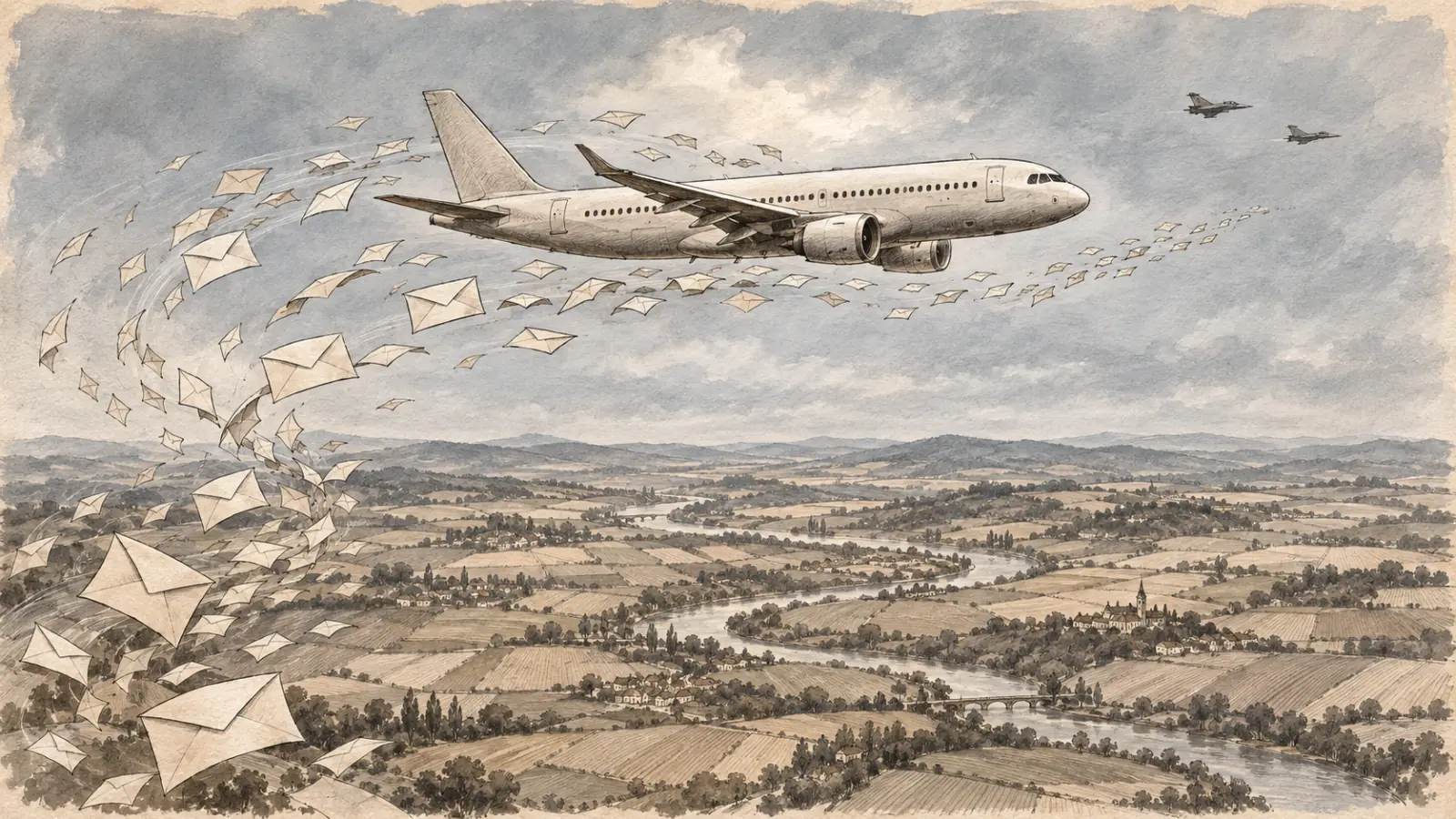
Are planes and train stations in Europe being rigged with bombs, and who is behind it?
Checked · updated · watching until
Translated from Russian. Original
Rumor: In early November 2026, retellings of the news claim that in Europe "planes and train stations are being mined" and that Russia, Iran or a coordinated "hybrid attack" is behind it.
1. Verdict
The wave of threats is real: from 3 to 5 November more than 30 flights received anonymous emails about "bombs"; planes were diverted and some were escorted by fighter jets. But no explosives were found on any aircraft — these are hoax threats, not planted bombs. There is no wave of threats against train stations: the only recent case was in Lublin, Poland, in October, and nothing was found there either. Who sends the emails is unknown: the "Male State" signature is unverified, its founder denies involvement, and no country has blamed anyone.
High: several independent outlets and the EU transport commissioner agree the threats were false and no culprit has been identified. Not very high: the threat emails were never published, and we could not find where the "stations" claim came from.
2. Claims and facts
- «Passenger planes across Europe are being "mined"»Partly
Partly true. The threats happened: on 3 November about seven flights and a cruise ship, on 5 November at least 27 flights (almost 30 by evening) in 14 countries, from Ireland to Bulgaria. An Aer Lingus Dublin–Rome flight was diverted to the French air base at Évreux; Finnair Helsinki–Rome and three planes in Bulgaria were escorted by fighter jets. But no explosives were found on any plane. These were anonymous hoax emails, not planted bombs.[1][2][3][6]
- «Train stations in Europe are being mined»False
No evidence. All reports we found from October–November 2026 concern planes and airports. The only recent station case was on 7 October in Lublin, Poland: bomb emails hit more than a dozen sites, including the station, which was evacuated; nothing was found. Separately, Italian schools received bomb emails on 19 October and 2 November — also empty.[13][14][11]
- «Bombs or explosives were found on planes»False
No. Searches in Madrid, Bulgaria, Warsaw, Milan, Évreux and other airports found nothing. Czech police rated the threats' credibility as low; the UK government called them "malicious hoax threats".[2][3][1]
- «Russia's "Male State" group is behind the threats»Unverifiable
Unverified. According to Italy's ANSA news agency, an email to Rome airport titled "Threat report" was signed by "fighters of the Male State" (an anti-feminist movement founded by blogger Vladislav Pozdnyakov and banned in Russia). Reuters could not verify who sent it. Pozdnyakov says the movement no longer exists and someone is "using someone else's flag". A signature in an email proves nothing on its own: anyone can write it.[9][10][8][2]
- «This is a proven hybrid attack by Russia or Iran»Unverifiable
Not proven. EU transport commissioner Apostolos Tzitzikostas said it is "too early to draw conclusions" on whether the cases are linked. No government has named a culprit; Russia and Iran deny involvement. Experts allow for both a coordinated operation and lone actors or copycats; a NATO analyst quoted by El Español: "we don't have evidence yet".[3][8][2][7]
- «The flight threats are part of one wave with the cyberattacks in Spain (Adif and Renfe, Extremadura health data, La Laguna city hall) and the train crash near Toledo»Unverifiable
No link found. The hack of Adif (Spain's rail infrastructure manager) and Renfe was in late September; the Extremadura health-data breach was disclosed in October and a suspect arrested; La Laguna city hall on Tenerife was hit on 2 November. No authority links these cases to the flight threats. The theory that hackers caused the train collision near Urda (Toledo) on 28 October is unsupported: Spain's transport minister blamed a failure of the train control system and a control-centre error (Maldita fact-check).[15][16][17][18][19][20][7]
3. Where the rumor came from
- Email; local media · pl
Lublin, Poland: bomb emails hit more than a dozen sites, including the train station and schools. The station is evacuated; nothing is found.[13]
- Aviation · en
An Austrian Airlines Tel Aviv–Vienna flight lands in Sofia after a threat, escorted by a Bulgarian fighter jet. Nothing is found.[2]
- Email; Italian media · it
Italy: about 100 schools receive bomb emails; some are evacuated. Nothing is found.[14]
- Aviation; email · en
A Wizz Air London–Sofia flight lands in Budapest escorted by a Hungarian fighter jet. The same day a bomb email reaches 271 schools in Italy.[2][14]
- Aviation · es
First wave: threats to about seven flights (Ryanair, LOT, SAS and others) and a cruise ship. Ryanair Manchester–Murcia: Murcia airport closed for over two hours; LOT diverts to Modlin near Warsaw. Nothing is found.[6][2]
- Aviation · en
Second wave: at least 27 flights, almost 30 by evening. Aer Lingus Dublin–Rome lands at the Évreux air base, Italian fighters escort Finnair Helsinki–Rome, Iberia and Air Europa flights are checked in Madrid. Nothing is found.[1][2][7][5]
- ANSA, then Russian-language media · it
Italian media report the email was signed by "fighters of the Male State". The movement's founder denies involvement; Reuters cannot confirm the signature.[9][10][8]
- X, then media · Apostolos Tzitzikostas, EU transport commissioner · en
"Too early to draw conclusions" on whether the cases are linked; any threat to civilians is "unacceptable".[3][4]
- El Español, Cyprus Mail (Reuters) · es
Analyses of the "hybrid attack" theory: experts see a familiar pattern but no evidence. No new waves of threats on 6 November in the sources found.[7][2]
How the text changed
- First come anonymous emails to airlines and airports: "devices on the flights will explode in 60 minutes".
- → News agencies report "bomb hoaxes"; in Russian-language retellings this becomes "mining of planes" — a word routinely used even for hoax calls.
- → In retellings the "mining" expands: "train stations" are added to planes, although there are no reports of new threats against stations. We could not find where the stations came from.
- → From the "fighters of the Male State" signature and experts' talk of a familiar "pattern", people conclude "it's definitely Russia" or "it's a coordinated hybrid attack", although no authority has established this.
4. What the media say
- RTÉDebunks
At least 27 flights, 14 countries, no explosives found, no country has blamed anyone; Russia and Iran deny involvement.[1]
- Cyprus Mail (Reuters)Context
Full timeline since 18 October; the "Male State" claim is unverified; experts: looks like hybrid tactics but is hard to prove.[2]
- Euronews, EunewsContext
EU transport commissioner: too early to say whether the cases are linked; threats came from anonymous addresses, Czech police rated them not credible.[3][4]
- El EspañolContext
Spanish experts call the wave a "textbook hybrid attack" but admit there is no evidence yet. Also notes the attacks on supermarket fridges — and that no link to the flight threats is proven.[7]
- Novaya Gazeta Europe, EchoRepeats
Retell Italian media on the "Male State" signature and its founder's denial.[9][10]
- MalditaDebunks
Claims that hackers or Israel caused the train crash near Urda are unsupported; the transport minister blames a system failure and a control-centre error.[20]
6. Signs of manipulation
- A word scarier than the facts. "Planes are being mined" instead of "hoax threats by email": no explosives were found on any aircraft.
- Expanding to things that did not happen. "Train stations" are added to planes, though apart from Lublin on 7 October no recent threats to stations were found.
- Unverifiable source. A "fighters of the Male State" signature in an anonymous email; Reuters did not confirm it, the movement's founder denies it.
- A ready-made culprit instead of facts. "It's Russia / Iran / a hybrid attack" — while the EU commissioner says it is "too early to draw conclusions" and no country has blamed anyone.
- Tying different events into one picture. Flight threats, data breaches in Spain and the train crash near Toledo are presented as one attack; no authority has made that link.
7. Similar rumors in the past
- Belgrade "paralysed": hundreds of bomb emails to schools, malls, the airport, train stations and the zoo
Outcome: More than 90 sites searched, nothing found; sender not identified. Serbia's interior minister spoke of "special warfare" without evidence.[21]
- India: hundreds of bomb threats against flights in two weeks; planes diverted and escorted by fighter jets
Outcome: No explosives found anywhere; a 17-year-old was arrested over some of the threats.[22]
- "Nuclear alert" in Ukraine's Air Raid Alert app and Russia's Emergencies Ministry app
Outcome: Fake: the apps were hacked and the alerts were false. Who was behind the hacks is unproven.
In common with past rumors
- Mass anonymous emails rather than real bombs: the aim is to disrupt and frighten
- Signatures in the name of known groups that cannot be verified
- Accusations against states come immediately, evidence does not
What is new
- Threats arrive mid-flight: planes land at military airfields, fighter jets scramble
- More than a dozen EU countries at once; the European Commission activated aviation-security information sharing
- The wave coincided with cyberattacks and hacks in Europe, which pushes people toward "it's all connected" without proof
9. What to do
- If you are flying in the coming days, check your flight status in the airline app or on the airport website: delays and diversions are possible, but so far every threat has been a hoax.
- There is no need to cancel trips because of this wave: crews and airports follow well-practised procedures when a threat arrives, and planes are searched.
- Don't forward "stations are being mined" messages without a link to the police or the station operator — that is how a false alarm spreads by itself.
- Be wary of ready-made answers about "who is to blame": no government has named anyone yet.
10. What we could not verify
- Who sends the emails and whether the waves are linked: not officially established.
- Whether the "Male State" signature is genuine: the emails were not published, and Reuters did not confirm the signature.
- Where the "mined train stations" version came from: we did not find an original source with that wording; it may be a mix-up with the aviation wave or older news (for example, the evacuation of Prague's main station on 14 July 2026).
- The exact number of flights: outlets give anywhere from 14 to almost 30 for 5 November — they count differently.
- Which Spanish flights were threatened and on which day: Infobae's report for 3 November names a Ryanair flight to Murcia; Iberia and Air Europa flights via Madrid appear in reports for 5 November; we did not see Guardia Civil data ourselves.
- Social media reach: we did not browse social networks directly.
11. Sources
- RTÉ — Aer Lingus plane among 27 flights hit by bomb hoaxes · accessed 2026.11.06
- Cyprus Mail (Reuters) — Europe flight bomb threats raise hybrid attack fears · accessed 2026.11.06
- Euronews — 'Too early' to say if Europe flight bomb threats linked, EU transport chief says · accessed 2026.11.06
- Eunews — Tzitzikostas: any threat to civilians is unacceptable · accessed 2026.11.06
- Al Jazeera — New bomb threats force more European flights into emergency landings · accessed 2026.11.06
- Infobae — six flights in Europe receive bomb threats (3 November) · accessed 2026.11.06
- El Español — dozens of hoax bomb threats at European airports fuel suspicion of hybrid sabotage · accessed 2026.11.06
- The Globe and Mail — Europe flight bomb threats, "Male State" signature · accessed 2026.11.06
- Novaya Gazeta Europe — plane bomb threats in Europe sent in the name of the "Male State" · accessed 2026.11.06
- Echo — "Male State" founder denies involvement in the emails · accessed 2026.11.06
- Ukrainska Pravda — planes in Europe make emergency landings after bomb reports · accessed 2026.11.06
- Korrespondent.net — Europe hit by a wave of fake plane bomb threats · accessed 2026.11.06
- Lublinews — series of bomb hoaxes in Lublin, station and schools evacuated (7 October) · accessed 2026.11.06
- Open — bomb emails to Italian schools, evacuations (2 November) · accessed 2026.11.06
- El Español — Adif hit by a sophisticated attack, information stolen (September 2026) · accessed 2026.11.06
- Maldita — what we know about the cyberattack on Renfe · accessed 2026.11.06
- Government of Extremadura — cyberattack on the Health Service (SES) · accessed 2026.11.06
- Redacción Médica — author of health-data attack arrested in Mérida · accessed 2026.11.06
- Diario de Avisos — cyberattack on La Laguna city hall · accessed 2026.11.06
- Maldita — unfounded theories about hackers and Israel in the Toledo train crash · accessed 2026.11.06
- Euronews (AP) — Serbia's capital Belgrade paralysed by hundreds of bomb threats (2022) · accessed 2026.11.06
- Wikipedia — 2024 Indian bomb hoaxes · accessed 2026.11.06









5. Social media
The wave is widely retold as "mining of planes in Europe". We found no viral posts specifically about "mined train stations"; we did not browse social networks directly and could not estimate reach.[11][12]
2026-11-05