Fact-checking alarming rumors
Where a rumor came from, what is true and what is not. Every fact links to a source.
 Confidence in the verdict: high (3 of 4)
Is it true that a "digital apocalypse" on November 17 will wipe bank accounts and shut down the internet?
FakeInternet & phonesThe rumor started with an anonymous post on October 31 and picked up new details with each retelling. The only real event on November 17 is a one-minute test of the US emergency alert system on radio and TV. It does not affect the internet or banks.
 Confidence in the verdict: high (3 of 4)
Are planes and train stations in Europe being rigged with bombs, and who is behind it?
False conclusionThreats & emergenciesThe wave of threats is real: from 3 to 5 November more than 30 flights received anonymous emails about "bombs"; planes were diverted and some were escorted by fighter jets. But no explosives were found on any aircraft — these are hoax threats, not planted bombs. There is no wave of threats against train stations: the only recent case was in Lublin, Poland, in October, and nothing was found there either. Who sends the emails is unknown: the "Male State" signature is unverified, its founder denies involvement, and no country has blamed anyone.
 Confidence in the verdict: high (3 of 4)
Is it true that hackers are deliberately spoiling food in European supermarkets and a shortage is coming?
False conclusionThreats & emergenciesThe attacks are real: on the night of October 12, hackers raised the temperature in fridges at hundreds of stores in France, and on the night of November 2, at around a hundred more stores in at least 9 European countries. Food had to be thrown away, with losses in the millions of euros. But there is no shortage: the EU agriculture commissioner said EU food security is "not currently at risk." Donated plasma in France was not spoiled — staff caught the problem in time. Who is behind the attacks has not been officially established.
 Confidence in the verdict: high (3 of 4)
Is it true that Ebola has reached Europe and lockdowns are coming?
False conclusionHealthThe outbreak is real and very severe: DR Congo has more than 10,600 confirmed cases and about 5,200 deaths. Patients have been brought to Europe: one doctor fell ill after returning to France, and several medics were evacuated for treatment to Germany, the Netherlands, Switzerland and, on November 5, London. But there has been no transmission inside Europe, and the risk for EU residents is rated very low. No country has locked down its population; the Kenyan "total lockdown", "Nigeria is Ebola-free" and the "first case in Sverdlovsk region" are fabrications.
 Confidence in the verdict: high (3 of 4)
Are the viral photos and videos from Europe's youth protests real?
FakePoliticsThe most viral images of this wave are fakes: made by AI, edited from old photos, or taken from a clip more than a year old. The letter about "€50 per protester" is invented; the agency that supposedly sent it does not exist. The protests themselves are real: on 17 October in France and 31 October in Germany there were both peaceful marches and looting of shops, but on a smaller scale and not where the fakes claim.
 Confidence in the verdict: very high (4 of 4)
Was the "nuclear alert" in Ukraine's Air Alert app and Russia's Emergencies Ministry app real?
FakeThreats & emergenciesThere was no nuclear, radiation or chemical threat. The messages were real in the sense that they came from official apps, but they were sent by intruders who got access to the panels used to push notifications. The state warning systems (sirens, SMS, radio and TV) in both countries worked normally. Different hacker groups claimed responsibility, and Ukraine's president said Ukraine had "responded" to an attack; no technical proof of who did it is publicly available.
 Confidence in the verdict: high (3 of 4)
Is it true that the new COVID strain PJ.2.1 is very dangerous and is being hidden in Russia and Kazakhstan?
False conclusionHealthPJ.2.1 exists: it is an Omicron descendant with many mutations, first found in Canada in May 2026. But there is no data that it causes more severe illness, and lab studies did not find strong immune escape. It has not been officially detected in Russia or Kazakhstan. The WHO explains this by the small number of samples tested, not by a cover-up.
 Confidence in the verdict: moderate (2 of 4)
Is it true that 40% of fuel is being taken for an “export reserve” and gas station sales will be limited?
False conclusionMoneyThe “orders” about putting 40% of fuel into an “export reserve” are fake: regional authorities did not issue them, and the references inside lead to non-existent or unrelated documents. The background is real, though: in 2026 dozens of regions did limit how much gasoline one person could buy, gasoline exports are banned, and diesel exports are, on the contrary, growing in November. By the end of October most regions lifted the limits, but some still have them. On November 1, after a strike on the refinery in Kstovo, the Nizhny Novgorod region introduced a new 40-liter limit.
 Confidence in the verdict: high (3 of 4)
Is it true that scientists have named the date of the end of the world: November 13, 2026?
False conclusionScience & predictionsThe 1960 paper is real, but it did not predict the end of the world. It is a calculation: if population kept growing as it had for the 2,000 years before 1960, it would reach infinity by November 13, 2026. Since the early 1990s growth has fallen behind the formula, and there are about 8.3 billion people today, not hundreds of billions. The date was chosen partly as a joke: it is the birthday of the lead author.
 Confidence in the verdict: very high (4 of 4)
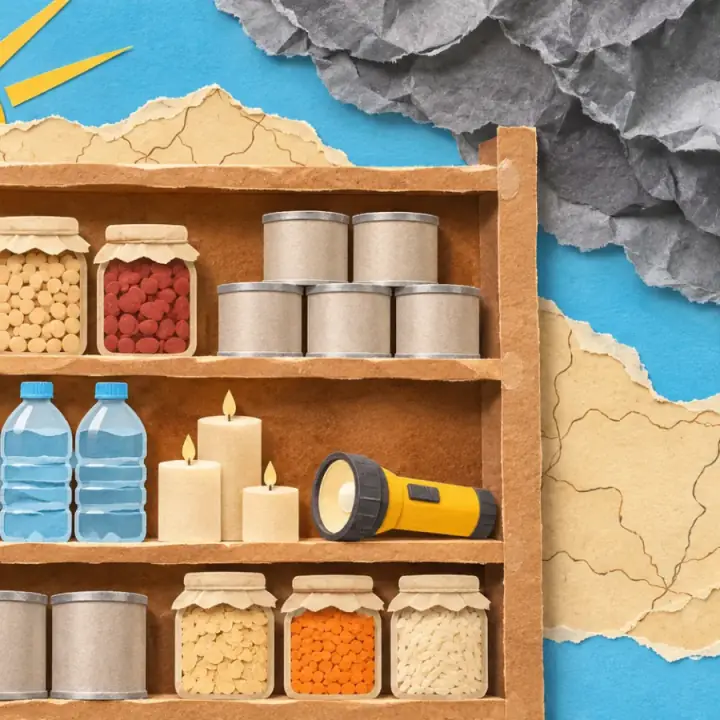
Is it true that 17 (or 33) countries and the EU told people to stock up on food and water before a disaster?
False conclusionThreats & emergenciesMany countries really do advise keeping 3 to 10 days of food and water at home. But it is not one secret joint signal: the programs launched in different years for different reasons, and many have been in place for a long time. No country tied them to November 17; the only thing scheduled for that date is a one-minute test of the US emergency alert system.
 Confidence in the verdict: high (3 of 4)
Is it true that WhatsApp and Telegram are shutting down in Russia on November 1 or 5, 2026?
False conclusionInternet & phonesNeither WhatsApp nor Telegram announced that they would stop working on November 1 or 5. The loud headline retells last year's story about Russian operators not delivering login codes by SMS. The real restrictions are serious, though: calls have been blocked since August 2025, WhatsApp has been blocked since February 2026, Telegram since spring 2026, and without a workaround both work poorly. But this has been going on for months, and the November date has nothing to do with it.
 Confidence in the verdict: high (3 of 4)
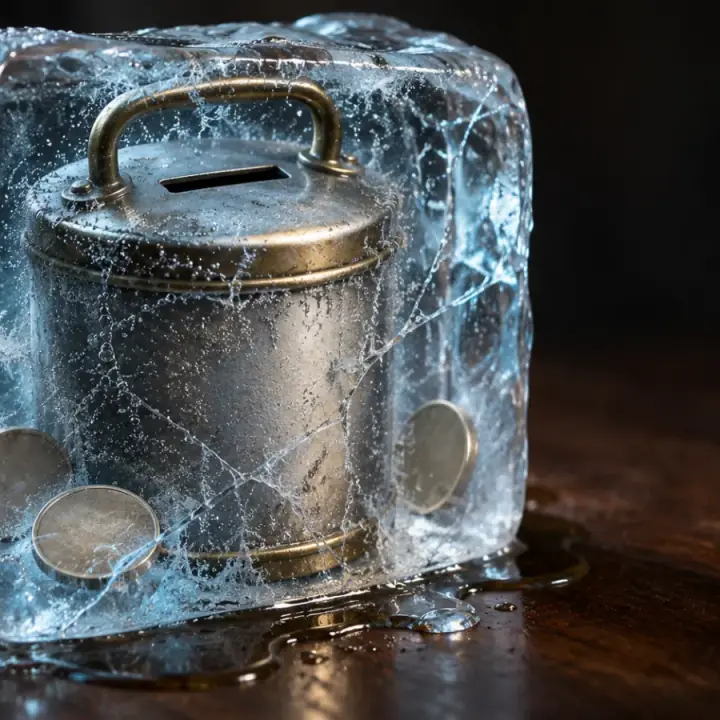
Is it true that the state will freeze deposits above 1.4 or 2.8 million rubles?
FakeMoneyThere is no decision to freeze deposits, and the "Central Bank decree" about deposits above 2.8 million is a forgery. The sums of 1.4 and 2.8 million are real, but they are deposit insurance limits: the amount the state is guaranteed to return if a bank loses its licence. They are not a freeze.
 Confidence in the verdict: high (3 of 4)
Is it true that the Social Fund or the tax service pays compensation for home internet?
FakeMoneyThe Social Fund and the tax service do not pay compensation for home internet or a computer, and they do not call with such offers. Scammers need the SMS code to log in to your Gosuslugi account, and through it reach your bank or loans. Real internet compensation exists only for remote workers: the employer pays it under the employment contract, with no calls and no codes.
 Confidence in the verdict: moderate (2 of 4)
Is it true that there is a plague outbreak in Irkutsk and hospitals are under quarantine?
False conclusionHealthA real event happened: on 2 October 2026 a 28-year-old worker of the Irkutsk Anti-Plague Institute died, and one hospital in Shelekhov was under quarantine for a week. There is no plague outbreak: no new patients were found, and the WHO saw no signs of transmission. But plague has not been fully ruled out either: the official diagnosis is pneumonia of unknown origin, and it cannot be checked independently.
 Confidence in the verdict: high (3 of 4)
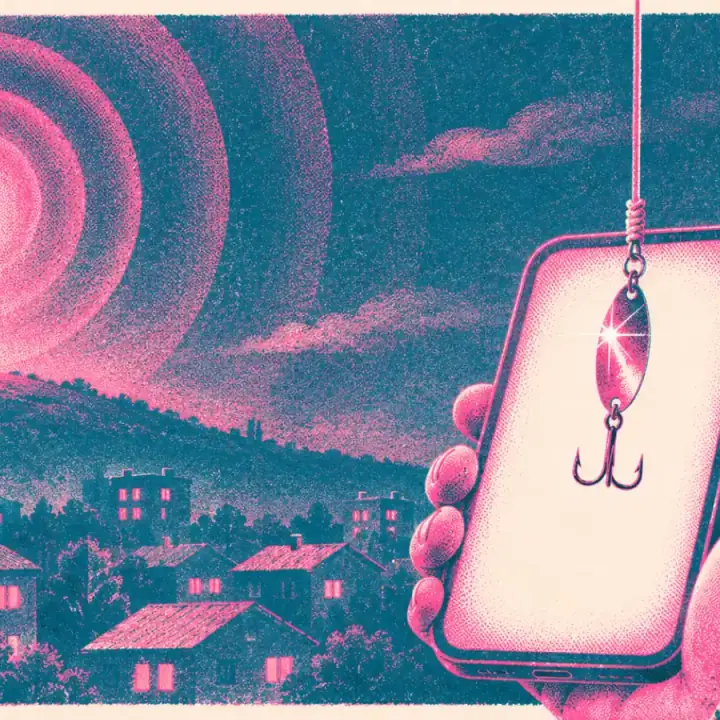
Is it true that Ukraine will switch off mobile service during air raid alerts under “law No. 395/2026”?
FakeInternet & phonesThere is no law on cutting mobile service during alerts. Number 395/2026 belongs only to a presidential decree appointing a judge and a government resolution on environmental control. There is no “autonomous system” either: all the links lead to one anonymous Telegram channel or to a third-party site. The rumor does have a real root: in 2025 the military and MPs discussed limiting mobile internet in a targeted way along the path of Shahed drones, but no decision was ever made.