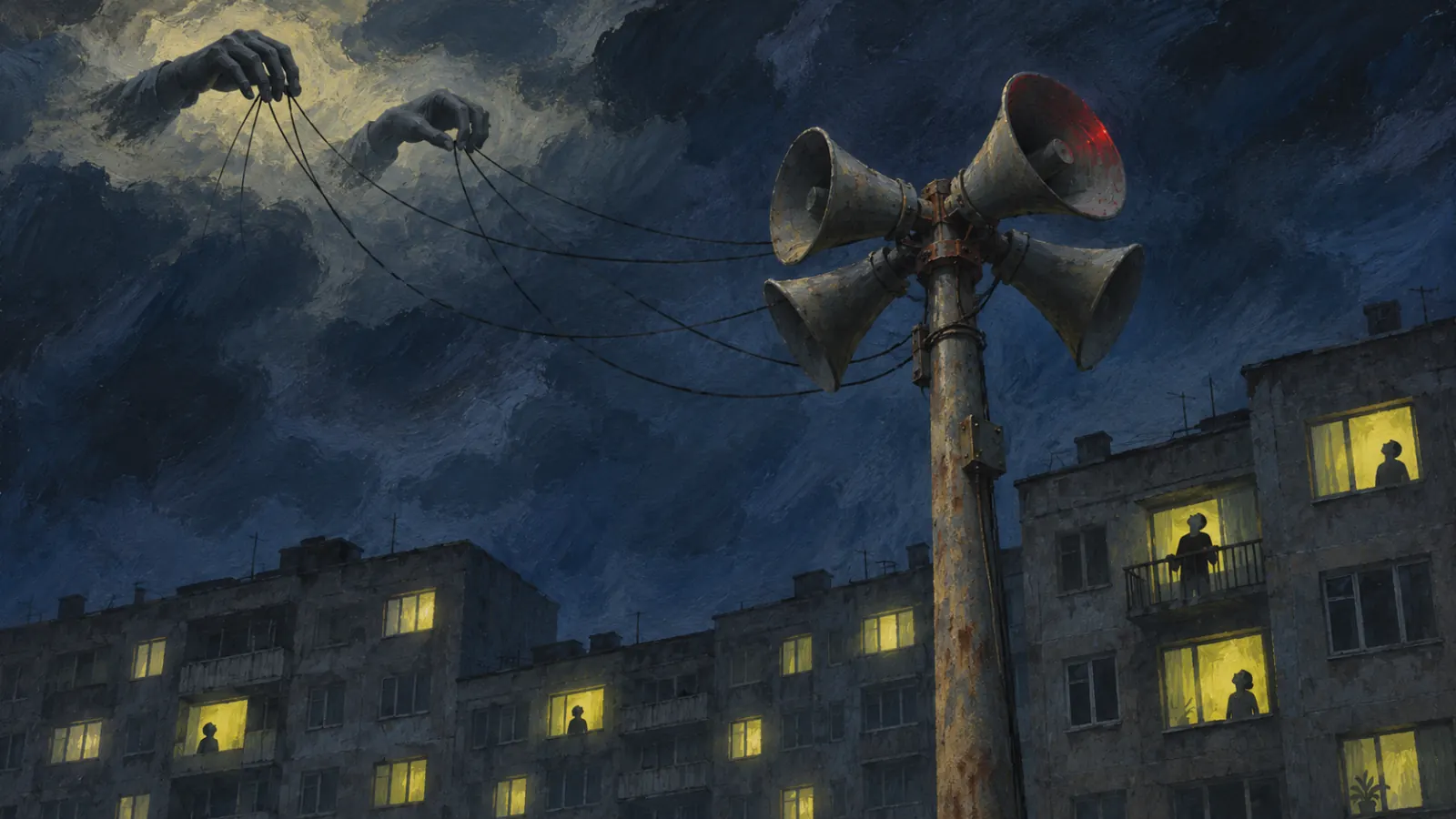
Was the "nuclear alert" in Ukraine's Air Alert app and Russia's Emergencies Ministry app real?
核查于 · 更新于
谣言: On the night of November 1–2, 2026, Ukraine's Air Alert app (Povitryana Tryvoha) sent warnings about radiation, a chemical threat and an "incoming Oreshnik" missile, while the app of Russia's Emergencies Ministry (MChS) reported "launched nuclear warheads" and told people to stock up on food and hide in basements. Screenshots spread across social media.
1. 结论
There was no nuclear, radiation or chemical threat. The messages were real in the sense that they came from official apps, but they were sent by intruders who got access to the panels used to push notifications. The state warning systems (sirens, SMS, radio and TV) in both countries worked normally. Different hacker groups claimed responsibility, and Ukraine's president said Ukraine had "responded" to an attack; no technical proof of who did it is publicly available.
Very high: both sides, in their official channels (Ukraine's Air Force and Russia's Emergencies Ministry), called the messages false, and the hacks were confirmed by the developers and several independent outlets. The verdict covers the alerts themselves; who was behind the hacks has not been independently established.
2. 说法与事实
- «Ukraine is under radiation and chemical danger, "an Oreshnik is incoming", and there is street fighting in Kyiv»虚假
Overnight into November 2, Ukraine's Air Force wrote that the app had likely been "subjected to enemy influence" and that "there is no radiation threat." The State Emergency Service (DSNS) said the national warning system was working normally, and the Kyiv city administration said the "Kyiv Digital" app and street sirens worked as usual.[1][11][10]
- «Nuclear warheads have been launched "at all regions" of Russia; stock up on food for three weeks and hide in basements»虚假
In its official Telegram channel, Russia's Emergencies Ministry (MChS) called it a "massive cyberattack" on the app: at about 02:45 Moscow time on November 2, a false message went out through the hacked admin panel to residents of 33 regions. Sirens, loudspeakers, SMS, TV and radio alerts kept working normally, the ministry said.[2][7][6][4]
- «The apps really were hacked»属实
True. The developers of Air Alert (Ajax Systems and Stfalcon) reported unauthorized access to the operator interface used to send alerts, not to the app on people's phones; core functions were back within two hours. MChS confirmed its admin panel was hacked, found the vulnerability and passed the data to Russia's National Coordination Center for Computer Incidents.[8][9][2][6]
- «The hack stole users' data or infected their phones»虚假
Air Alert's developers say there was no leak: the app does not store or transmit personal data and has no access to key phone functions. The sources found report no leak of MChS app users' data. The main risk was the links inside the fake alerts, which people were told not to open.[8][3]
- «Russia hacked the Ukrainian app, and Ukraine hacked the Russian one»无法核实
Not proven. A previously unknown group, Hitcore, claimed the Air Alert hack; Ukraine's Air Force spoke of "enemy influence," and Ukraine's Center for Strategic Communications (SPRAVDI) blamed Russia. The MChS hack was claimed by a group called DC8044 (which describes itself as a Kyiv-based hacker community) and, according to Ukrainian media, by the ATESH movement. Ukraine's president told PBS: "We only respond to their attacks." MChS named no culprit. No independent technical investigation is publicly available.[3][5][13][14][15][16]
3. 谣言从哪里来
- Air Alert app · uk
At about 22:48–22:50 Kyiv time, users across Ukraine get alerts about radiation and chemical danger, street fighting in Kyiv, and a Russian-language message saying "an Oreshnik is incoming" with a link to a Telegram channel.[10][12][4]
- Telegram · Ukrainian Air Force (@kpszsu) · uk
The Air Force writes that the app was likely subjected to enemy influence and that there is no radiation threat. The Center for Countering Disinformation, the State Emergency Service and the Kyiv administration also call the alerts false.[1][11]
- DOU, the app · uk
The developers report outside interference and switch off push notifications; core functions are restored within two hours.[9][3]
- "MChS Russia" app · ru
At about 02:45 Moscow time, residents of 33 regions receive a message about "launched nuclear warheads" telling them to stock up on food for three weeks and hide in basements.[2][7][13]
- Telegram · ru
The group DC8044 and, according to Ukrainian media, the ATESH movement claim the MChS hack. The group Hitcore claims the hack of the Ukrainian app. None of it is confirmed.[3][13][14]
- Telegram · Russia's Emergencies Ministry (@mchs_official) · ru
MChS confirms a "massive cyberattack," says the warning system was not affected, the vulnerability has been found, the false posts have been removed from its channels on the MAX messenger, and full functionality will be back by the end of the day.[2][6]
- Kremlin briefing · ru
Kremlin spokesman Dmitry Peskov says all agencies' online resources are under threat of cyberattacks and protection must be strengthened.[18][19]
- PBS NewsHour · en
Asked about the hack of the Russian app, Volodymyr Zelensky replies: "We just responded to the attack." He gives no details.[15][16]
- DOU · uk
The developers explain that the intruders accessed the operator interface and server side, not the app on users' phones; there was no data leak and a security audit is ongoing.[8]
文本如何变化
- It started as short push notifications in the apps themselves: "Radiation danger!", "Street fighting!", "an Oreshnik is incoming", "Threat of a ruckus! Don't worry!"
- → Then the screenshots spread on Telegram and social media as an "official nuclear strike warning," often with no note that it was a hack.
- → By morning, media in both countries were reporting the hacks, with diverging headlines: Ukrainian ones said "Russians hacked," some Russian ones said "Ukraine claimed responsibility."
- → After the PBS interview, some retellings turned the Ukrainian president's remark into "confirmation" that Ukraine carried out the MChS hack, although he named neither the perpetrator nor the method.
4. 媒体怎么说
- The Record (Recorded Future News)辟谣
Both sets of alerts were false; the claims by Hitcore and DC8044 are unconfirmed; recalls earlier hacks of alert systems.[3]
- Meduza辟谣
Both agencies confirmed the hacks and called the messages fake; who was behind the attacks is unknown.[4]
- Al Jazeera背景
Relays both sides' statements: SPRAVDI blamed Russia, Russia named no culprit.[5]
- Vedomosti, URA.RU辟谣
Details from MChS: admin panel hacked, 33 regions, around 02:45 Moscow time, the warning system is working.[6][7]
- Radio Svoboda, Obozrevatel, Slovo i Dilo辟谣
Statements by the Air Force, State Emergency Service, Center for Countering Disinformation and the Kyiv administration: no threats, use official channels.[10][11][12]
- DOU背景
The developers' explanation: what exactly was hacked and why users' data was not affected.[8][9]
- Kyiv Post, Ukrinform, Lenta.ru背景
Zelensky's PBS interview; Lenta.ru presents it as "claimed responsibility," citing a Telegram channel rather than the interview itself.[15][16][17]
6. 操纵迹象
- An official channel was used. The messages came from apps people trust: Air Alert and "MChS Russia."
- Fear-inducing labels. "nuclear alert," "an Oreshnik is incoming," "nuclear warheads at all regions."
- Call to action. "Urgently stock up on food for 3 weeks," hide in basements; in Ukraine, a link to an outside Telegram channel.
- Scaremongering and "reassurance" in one sentence. "Don't worry, an Oreshnik is incoming!" and "Threat of a ruckus! Don't worry!" — mockery you never see in real alerts.
- Night-time timing. Around 22:50 Kyiv time and around 02:45 Moscow time, when people are asleep and it is harder to check the news.
- Unverifiable claims of authorship. Hitcore, DC8044 and ATESH announced themselves on Telegram; they published no evidence beyond screenshots.
7. 过去的类似谣言
- Russian radio stations in several cities broadcast an air raid alert and told people to go to shelters
结果: Russia's Emergencies Ministry said commercial stations had been hacked; there was no threat.[23]
- Israel's Red Alert app sent "the nuclear bomb is coming"
结果: The AnonGhost group exploited a flaw in the app's interface to send fake alerts; there was no threat.[24]
- Hawaii residents got an alert about an incoming ballistic missile: "this is not a drill"
结果: Not a hack but an employee's mistake during a drill; the correction came only 38 minutes later. The FCC regulator pointed to the lack of safeguards against a single person's error.[25]
- "Ukraine will cut mobile service during air raid alerts"
结果: Fake; it appeared three days after the Air Alert hack, riding a wave of distrust in alerts.
与过去谣言的共同点
- The false warning arrives through a real, familiar alert channel, so people believe it at once
- The scariest words: "nuclear," "radiation," "not a drill"
- Agencies debunk within an hour, but screenshots outlive the debunks
新内容
- Two countries, two apps, one night: hacks a few hours apart
- The intruders used not the app on the phone but the panel operators use to send alerts
- Several groups claimed responsibility at once, and a head of state publicly called it a "response"
9. 应该怎么做
- If you get a frightening alert, check it against a second official channel: sirens, emergency SMS from your carrier, the Air Force's Telegram in Ukraine, or the MChS website and channels in Russia.
- Don't open links inside alerts: real warnings don't send you to outside Telegram channels.
- Turn on emergency alerts in your phone's settings — it is a separate channel from these apps and was not affected by the hacks.
- Don't forward screenshots without noting it was a hack: that keeps the fake scaring people even after it has been debunked.
10. 我们未能核实的内容
- Who was really behind both hacks: no one has independently confirmed the claims by Hitcore, DC8044 and ATESH, and no technical investigation is publicly available.
- Whether the two hacks were connected: this has not been officially established; there are only the parties' statements.
- How many alerts were sent in Ukraine: one outlet cited 122 messages in seven minutes, but we could not open the page.
- How exactly Air Alert was hacked: retellings mention a malicious file sent to an administrator; the developers are not disclosing details.
- How many people received the messages and how many views the screenshots got — no data.
- Al Jazeera summarized the MChS statement as a false message about "incoming drone attacks"; MChS itself and Russian media speak of a message about nuclear warheads.
11. 来源
- Ukrainian Air Force, Telegram: the app was likely subjected to enemy influence · 访问于 2026.11.06
- Russia's Emergencies Ministry, Telegram: cyberattack on the app's admin panel · 访问于 2026.11.06
- The Record — Hackers hijack emergency apps to spread fake nuclear attack warnings · 访问于 2026.11.06
- Meduza — alert apps hacked in Russia and Ukraine (in Russian) · 访问于 2026.11.06
- Al Jazeera — Russia, Ukraine air raid alert apps hit by cyberattacks · 访问于 2026.11.06
- Vedomosti — MChS app hit by a cyberattack in 33 regions (in Russian) · 访问于 2026.11.06
- URA.RU — MChS app hit by a massive cyberattack (in Russian) · 访问于 2026.11.06
- DOU — Air Alert developers explain how the hack happened (in Ukrainian) · 访问于 2026.11.06
- DOU — hackers broke into the Air Alert app built by Ajax and Stfalcon (in Ukrainian) · 访问于 2026.11.06
- Radio Svoboda — Air Force: Air Alert app under enemy influence (in Ukrainian) · 访问于 2026.11.06
- Obozrevatel — "Radiation danger!" and "Street fighting!": unknown hackers broke into the app (in Ukrainian) · 访问于 2026.11.06
- Slovo i Dilo — fake "radiation threat" notifications in the app (in Ukrainian) · 访问于 2026.11.06
- RBC-Ukraine — Russia's MChS app hacked, people told to stock up on food (in Ukrainian) · 访问于 2026.11.06
- UNN — someone hacked Russia's MChS app (ATESH claim) (in Russian) · 访问于 2026.11.06
- Kyiv Post — Zelensky confirms Ukraine retaliated against Russian cyberattack · 访问于 2026.11.06
- Ukrinform — Zelensky on responding to a Russian cyberattack (PBS interview) · 访问于 2026.11.06
- Lenta.ru — "Zelensky took responsibility for the MChS app hack" (in Russian) · 访问于 2026.11.06
- Rossiyskaya Gazeta — Peskov on cyberattacks against agencies' resources (in Russian) · 访问于 2026.11.06
- Gazeta.ru — Kremlin takes note of the cyberattack on the MChS app (in Russian) · 访问于 2026.11.06
- Mosregtoday — MChS confirms app hack and false notifications (in Russian) · 访问于 2026.11.06
- E1.ru — hackers broke into the MChS app and sent fake nuclear threats (in Russian) · 访问于 2026.11.06
- Sib.fm — Novosibirsk residents warned about fake MChS notifications (in Russian) · 访问于 2026.11.06
- Meduza — authorities blame hackers for air raid sirens on radio in Russian cities (2023) · 访问于 2026.11.06
- Bitdefender — hacktivists send fake nuclear attack warning via Israeli Red Alert app (2023) · 访问于 2026.11.06
- Salt Lake Tribune (AP) — FCC on Hawaii's false missile alert (2018) · 访问于 2026.11.06









5. 社交媒体
Posts a screenshot of the message for Voronezh region and claims it hacked the MChS app. Not independently verified.[13][14]
2026-11-02
One of the fake alerts in the Ukrainian app linked to an outside Telegram channel; the Center for Countering Disinformation and the developers asked people not to follow the link or subscribe. The channel's name is not given in public sources.[8][12]
2026-11-01
Regional media in Omsk, Yekaterinburg, Novosibirsk and other cities reported local residents getting messages "from MChS" and immediately explained it was a hack. Views could not be estimated.[20][21][22]
2026-11-02