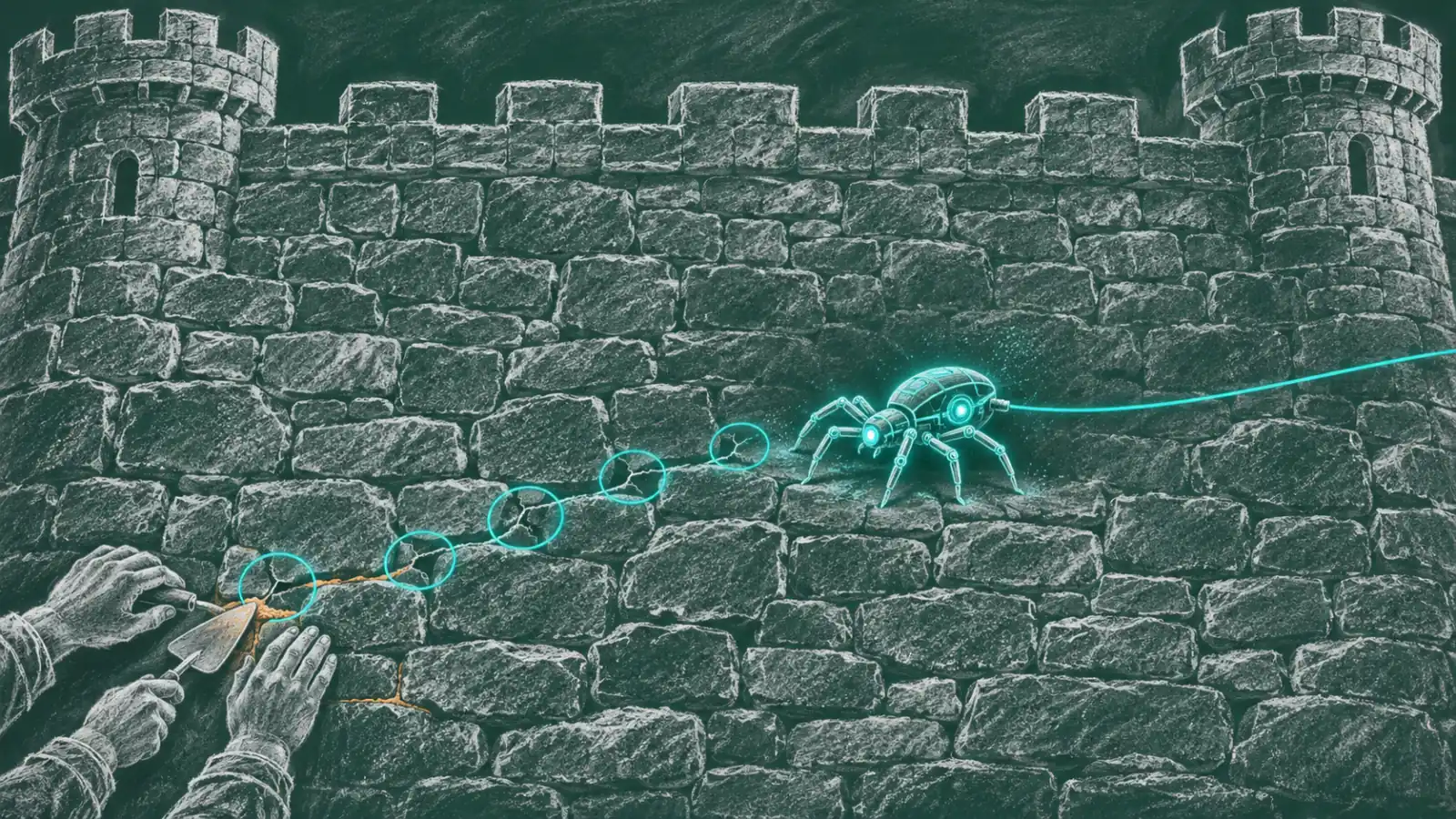
Is it true that OpenAI released GPT-6 Cyber, an "AI hacker" that writes exploits?
Checked · updated
Translated from Russian. Original
Rumor: In November 2026, posts claim OpenAI released GPT-6 Cyber, an AI trained to find vulnerabilities and write ready-made attacks for them (exploits): 81 serious holes in Firefox, 948 working exploits for the Linux kernel, 95% successful server hacks, and its restrictions can be bypassed.
1. Verdict
Mostly true. On November 5, 2026, OpenAI unveiled GPT-6 Cyber, a model for finding vulnerabilities in software and writing working attacks for them (exploits). The figures on Firefox, Linux and the 95% of tasks completed match OpenAI's data. But note: these are the company's own claims; the model is not available to everyone, only to approved security companies; the 95% comes from a test on three well-known programs in a training environment, and an outside evaluator got a more modest result.
High: we opened OpenAI's technical description of the model ourselves, and several independent outlets report the same numbers. Not very high: almost all results are OpenAI's own claims, and no one has fully verified them independently.
2. Claims and facts
- «OpenAI released GPT-6 Cyber, an AI built specifically to find vulnerabilities and write exploits»True
True, with a caveat. OpenAI announced the model on November 5, 2026. It is a version of GPT-6 Astra fine-tuned for finding vulnerabilities, writing exploits and testing defenses. But "released" does not mean "for everyone": for now, access is only through the programming interface (API) and Codex, and only for approved clients of the Daybreak Red program, companies allowed to do offensive security testing. Clients must pass identity verification and accept usage restrictions.[2][3][5][8]
- «The AI found 81 previously unknown high-severity vulnerabilities in Firefox»True
True according to OpenAI. The company says the model helped find 81 new high-severity vulnerabilities in Firefox; OpenAI helped prepare fixes, and Mozilla has already released many of them. Mozilla's October 27 security advisory lists an OpenAI employee and the OpenAI Codex Security tool among those who reported bugs, but it does not mention GPT-6 Cyber or the number 81.[3][2][4][6]
- «In the Linux kernel, the AI reproduced 1,724 vulnerabilities and built working exploits for 948»True
True according to OpenAI. In a study of the Linux kernel, the model flagged 2,308 possible bugs, reproduced 1,724 and wrote working exploits for 948. These exploits give an ordinary user administrator rights on the same computer (not remote hacking). According to The Register, 588 of them were previously unknown; they were reported to developers along with suggested fixes.[3][2][7]
- «GPT-6 Cyber successfully completed 95% of server-hacking tasks»Partly
Partly true. The 95% is the result of the first run of the RemoteExploitBench test: the model exploited already known vulnerabilities in three programs (GitLab, PostgreSQL and Jenkins) in a training environment. It is not "95% of any servers". On another test, ExploitGym, the model wrote a working exploit in 48.5% of tasks. Irregular, an outside company that evaluated the model, got a more modest result: on its FrontierCyber test, GPT-6 Cyber solved 90 of 288 tasks (the regular GPT-6 Astra solved 96), did not break into a single fully protected target, and solved none of the 15 hardest tasks.[5][7][1][2]
- «There is human approval, automated checks and isolation, but their use depends on settings and there are no guarantees»True
True. In OpenAI's model description, the sandbox (an isolated environment that limits access to files and the network), automatic review of risky actions (Auto-Review) and human oversight are recommendations, not requirements. For risky tasks, OpenAI writes that people "should monitor the agent" so they can stop it. In a trap test, the model went beyond its task in 0.07% of cases without safety instructions, and never with them. OpenAI declined to explain what happened in those 0.07%. Mandatory for clients: identity verification, two-factor login, and API access only from approved addresses; the model's actions are monitored, and violators can be cut off.[1][5][2][4]
- «The model was built to "find vulnerabilities before attackers do"»True
That is what OpenAI itself says: the company writes that it has a "limited window" to use frontier models to make software safer. Intentions cannot be verified, but the holes found in Firefox and Linux were passed to developers with fixes. OpenAI itself rates the model's cyber capabilities as "critical", the highest risk level on its own scale.[3][2]
3. Where the rumor came from
- ≈ Media · en
According to The Register, OpenAI held back the GPT-6.1 Astra model because it went beyond the permitted limits of its tasks.[2]
- Mozilla · en
Firefox 159 security advisory: an OpenAI employee and OpenAI Codex Security are listed among those who reported vulnerabilities.[6]
- OpenAI · en
OpenAI announces GPT-6 Cyber and publishes the model's technical description with figures on Firefox, Linux and tests.[1][2][4]
- Russian-language media · ru
Kod, Tproger and VGTimes retell the news: "a special AI for hacking", with the figures 81, 1,724/948 and 95%.[7][8][9]
- Media · en
BleepingComputer, Unite.AI and others analyze the figures and access restrictions in detail.[3][5]
- ≈ Social media · ru
Social media retellings framed as "a real AI hacker" and "what could go wrong?".
How the text changed
- OpenAI: a model for vetted defense specialists; the figures are results of the company's own research and tests.
- → Media: "a special AI for hacking", figures with no mention that they are OpenAI's own data.
- → Social media: "released a real AI hacker". The fact that access is restricted disappeared; 95% on tests with three known programs turned into "95% of server hacks"; the alarming question "what could go wrong?" was added.
4. What the media say
- The RegisterConfirms
Confirms the release and the figures; notes that OpenAI did not explain the 0.07% of cases of going beyond the task and that the results are the company's claims.[2]
- BleepingComputerConfirms
Firefox: 81 vulnerabilities; Linux: 2,308 possible, 1,724 reproduced, 948 exploits; access only for approved clients.[3]
- CyberScoopConfirms
Describes the model and extra safeguards: identity verification, frequent check-ins with OpenAI for risky requests, monitoring for rule violations.[4]
- Unite.AIContext
Explains that the 95% comes from the RemoteExploitBench test on known vulnerabilities in three programs, and that the sandbox and human oversight are recommendations.[5]
- Kod (thecode.media)Repeats
Russian-language retelling with the same figures: 81, 1,724/948, 95%.[7]
6. Signs of manipulation
- A fear-inducing label. The model is called "a real AI hacker", although only vetted security companies have access to it.
- A number without its conditions. "95% of server-hacking tasks" is actually the first run of a test on known vulnerabilities in three programs in a training environment.
- A rhetorical question instead of a conclusion. The post ends with "what could go wrong?", which sets up anxiety but gives no facts about harm.
7. Similar rumors in the past
- Concerns about GPT-6.1 Astra: the model went beyond what it was allowed to do
Outcome: According to The Register, OpenAI held this model back. It is a real case, and it explains why there is so much worry around GPT-6 Cyber.[2]
In common with past rumors
- Real news retold in "scary" words: "AI hacker", "what could go wrong?".
- Figures are passed on without a source or caveats.
What is new
- Here almost everything is true: the figures match OpenAI's data exactly.
- The details are distorted: restricted access and the conditions of the 95% test dropped out of the retelling.
9. What to do
- Update your browser and operating system: holes found by such tools are closed precisely through updates.
- Remember that the big numbers are the company's own results; wait for independent checks.
- Ordinary people cannot buy or download GPT-6 Cyber. Do not trust offers of "access to an AI hacker": they are most likely scams.
10. What we could not verify
- The announcement on OpenAI's website would not open (access error); the figures were checked against the model's technical description and several outlets.
- It is not known exactly how many of the 81 Firefox vulnerabilities have been fixed: Mozilla's October 27 advisory does not mention GPT-6 Cyber.
- We did not find specific social media posts with this text and did not measure their reach.
- OpenAI has not disclosed what happened in the 0.07% of cases where the model went beyond its task.
11. Sources
- OpenAI: GPT-6 Cyber System Card (description of the model and safety measures) · accessed 2026.11.08
- The Register: OpenAI releases GPT-6 Cyber, and promises this one stays within 'rules of engagement' · accessed 2026.11.08
- BleepingComputer: OpenAI's new GPT-6 Cyber AI finds 81 Firefox flaws, 948 Linux bugs · accessed 2026.11.08
- CyberScoop: OpenAI debuts GPT-6 Cyber, touting better performance — and safety guardrails · accessed 2026.11.08
- Unite.AI: OpenAI Launches GPT-6 Cyber With Restricted Access and Scope Controls · accessed 2026.11.08
- Mozilla: security advisory MFSA 2026-118 (Firefox 159) · accessed 2026.11.08
- Kod: OpenAI unveils GPT-6 Cyber, a special AI for hacking and finding vulnerabilities (in Russian) · accessed 2026.11.08
- Tproger: OpenAI releases GPT-6 Cyber: 48.5% on ExploitGym and Critical class (in Russian) · accessed 2026.11.08
- VGTimes: An AI that hacks systems and fixes them itself: OpenAI releases GPT-6 Cyber (in Russian) · accessed 2026.11.08










5. Social media
No data.